Teachers don't need an engineering background to run a STEM lab. They need hands-on training on the exact kit they'll use, a ready lesson for every period, and equipment that doesn't stop the class when something is connected wrongly. With those three in place, a few days of training is enough for most teachers to run sessions on their own.
The common mistake is to treat training as a one-time event on delivery day. The trainer leaves, the first session goes wrong, and the kits go back in the cupboard. Training works when it builds confidence for week 10, not just for day 1.
We've trained more than 10,000 teachers, many of them in schools where nobody had run a STEM session before. Most of that training runs through our EdTech partners: we train their trainers, and they train the teachers in each school, on the same kit and the same lessons. This guide covers what that training has to include.
10,000+
Teachers trained by Cretile
3 to 5 days
Typical training, depending on the size of the order
40 minutes
One project, start to finish, in one period
Lifetime
LMS access, with a video for every project
Do STEM teachers need a technical background?
No. Most teachers who run school STEM labs are science, maths or computer teachers, or simply whoever is available, and few come from an electronics or engineering background. What they need is to understand the kit, not electronics in general.
The real problem is time. A teacher has a 40-minute period and a syllabus to finish. If a loose wire or a code error has to be fixed mid-class, the period is lost, and the teacher reasonably stops using the lab except when there's spare time. Teachers shouldn't have to become engineers to run a lab.
So the question for a school isn't "do our teachers know robotics?" It's "will this kit and this training let them run a session without help?"
What should STEM teacher training cover?
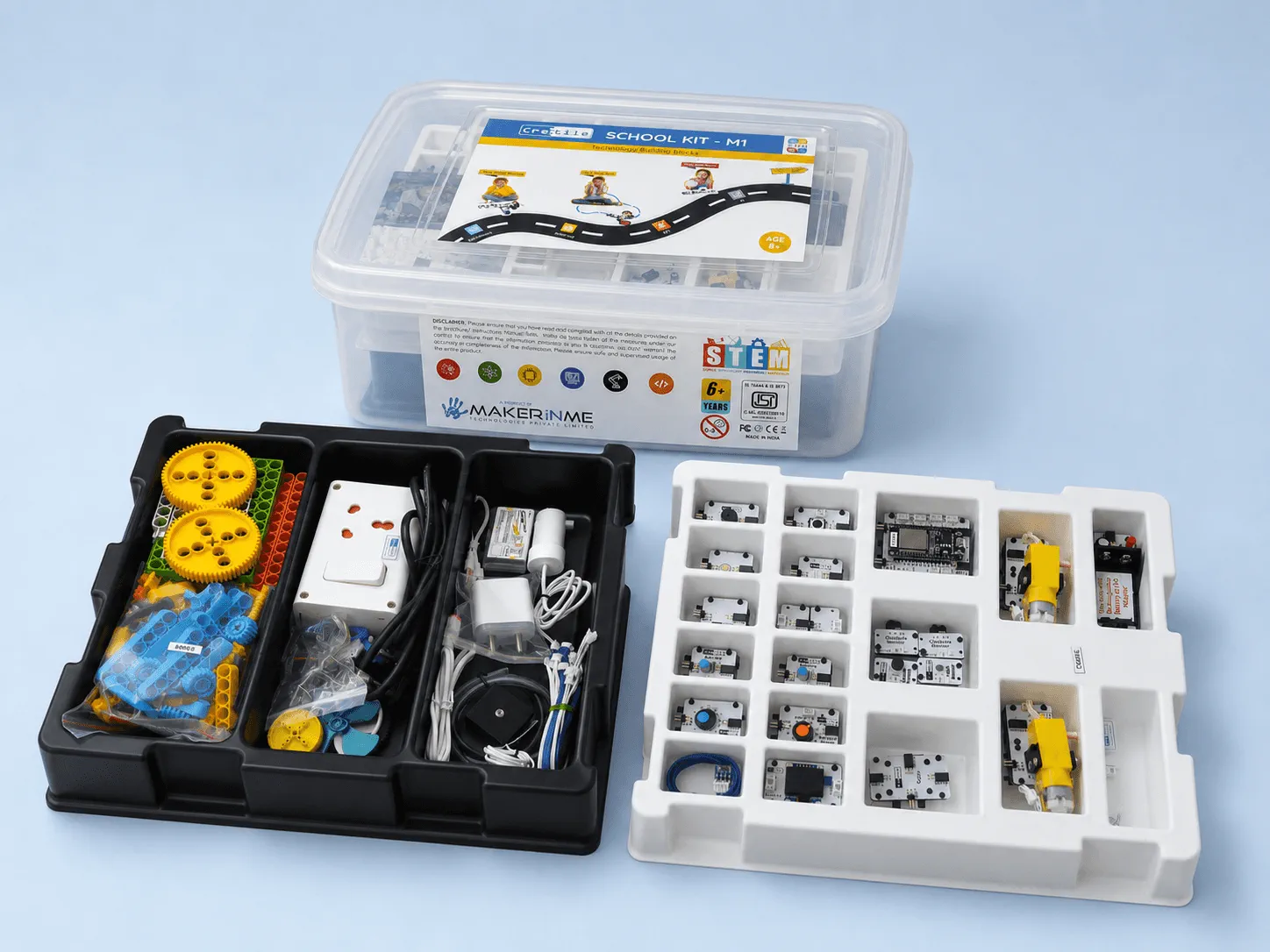
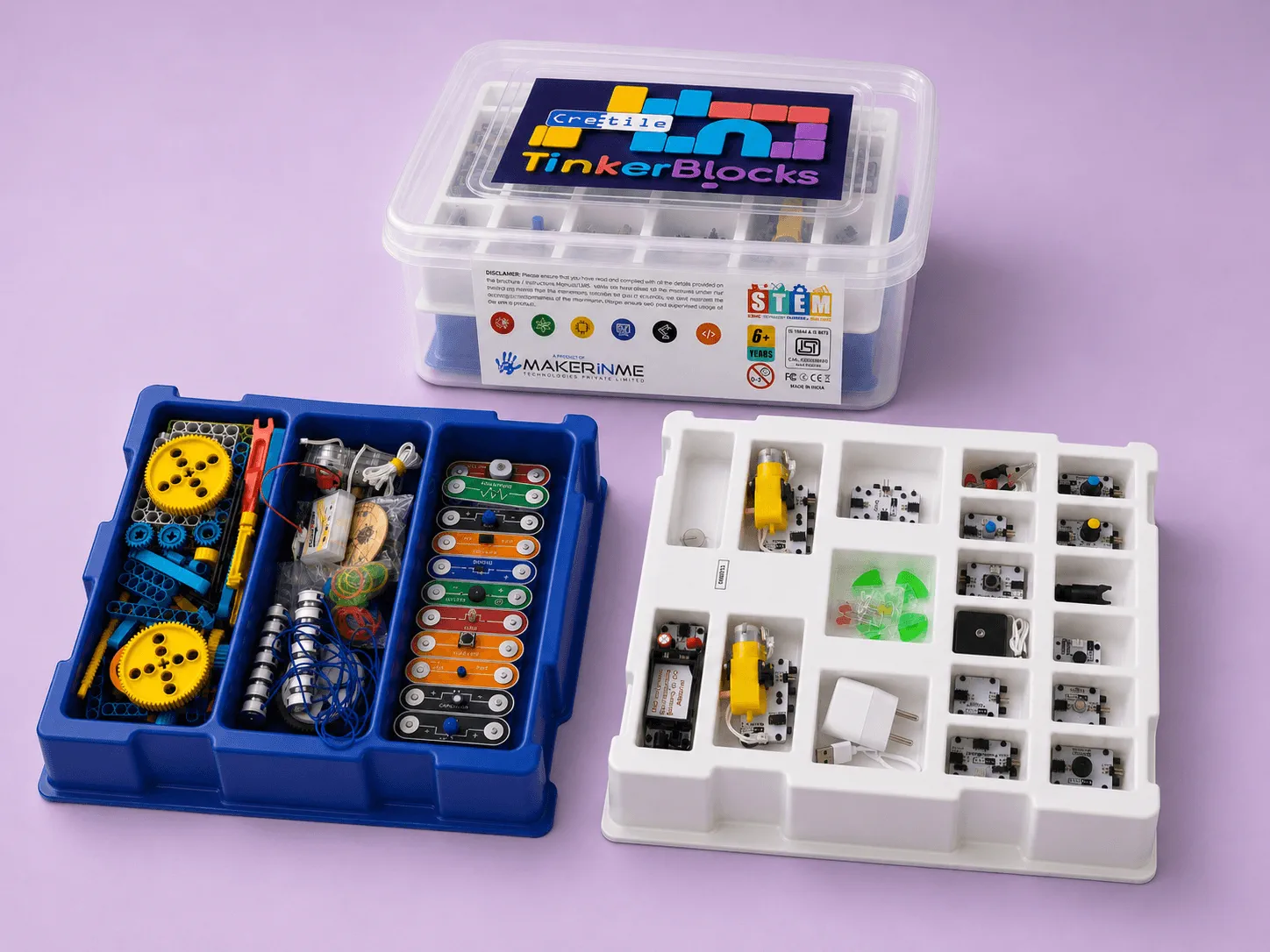
Good training covers four things, in this order: what each part of the kit does, how to build the projects students will build, how to run a 40-minute class around a project, and where to find the next lesson.
| Part of training |
What teachers learn |
Why it matters |
| How the kit works |
What each block or module does, and why it's there |
Teachers can fix a fault instead of abandoning the session |
| Building the projects |
Building the same projects their students will build |
They've already met the mistakes students will make |
| Running the class |
How to split a period: introduce, build and test, fix and reflect |
The project fits the timetable |
| Finding the next lesson |
Where the videos, guides and slides for each project are |
They aren't preparing from scratch every week |
In Yadgiri, Karnataka, our trainer ran a two-day session for educators who would use Cretile kits in their own classrooms. Most of them didn't come from a technical background. So the training started with fundamentals: what each module does and what role it plays, before any project. Once teachers know why a part exists, they can reason about a fault instead of guessing.
How long does STEM teacher training take?
Plan for 3 to 5 days of hands-on training for a new lab, depending on how many teachers and kits are involved. A focused two-day session can work for a small group with a clear goal.
In Rajkot, Gujarat, our trainer Vrushali spent two days with 5 teachers. The goal was to get them confident enough to teach with Cretile without relying on support.
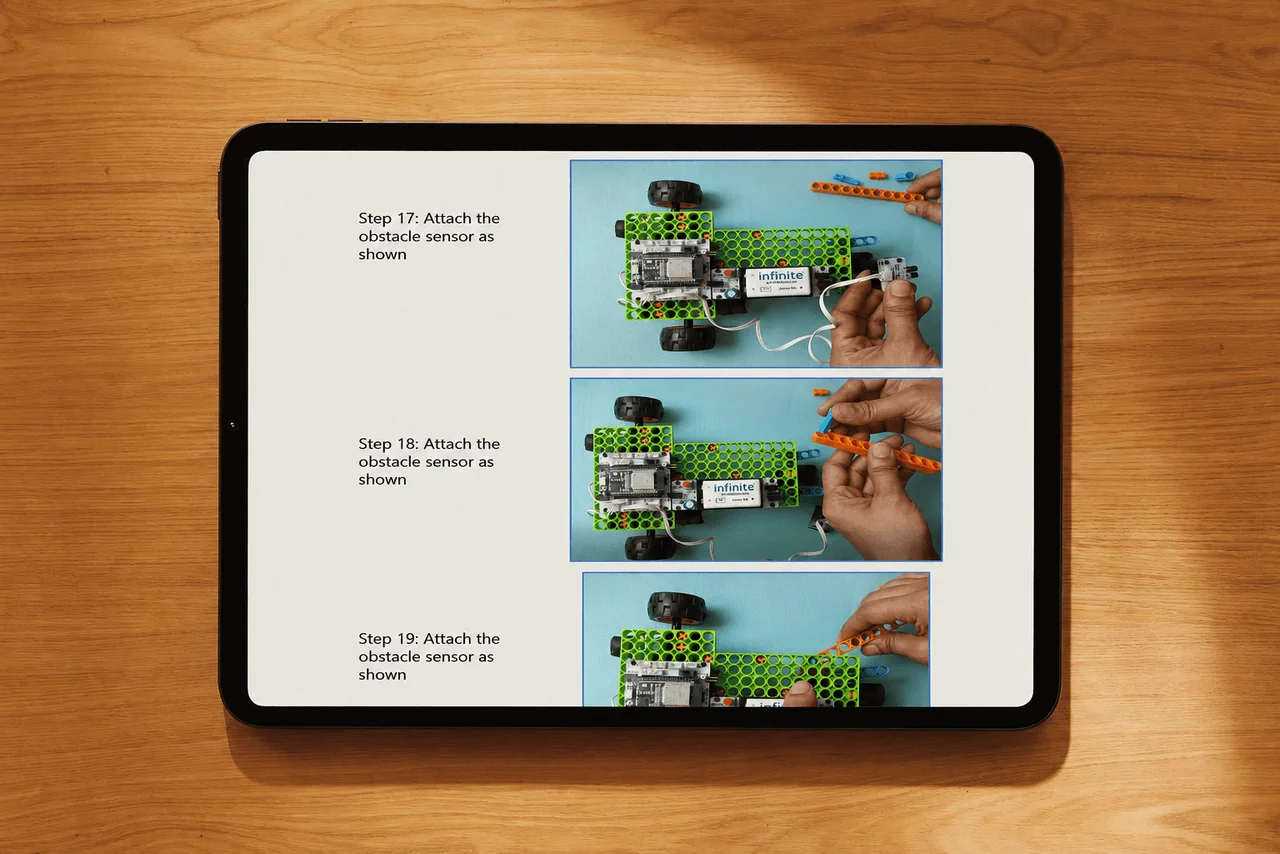
- Day 1 was practical. Teachers built a Soil Dry Alarm, a Touch Me Not Robot and a Smart Street Light.
- Day 2 went deeper. NetLogic (the programmable block), programming, MIT App Inventor for building phone apps, and a walkthrough of the learning platform and its resources.
The feedback was short: the kits just work.
Training doesn't have to be in person, but the first build should be hands-on. Watching a video of a circuit isn't the same as building one that doesn't work and finding out why.
How should a teacher run a STEM lab period?
Split a 40-minute period into three parts: about 15 minutes to introduce the project and the idea behind it, 15 minutes to build and test, and 10 minutes to find what went wrong, fix it, and talk about why it works. It varies by project.
The last 10 minutes are the ones most often skipped, and they matter most. A working project isn't proof of learning. Small changes in how the teacher runs the class help more than new projects:
- Pause and ask what surprised the students.
- Let them struggle a little before stepping in to fix it.
- End with "now I understand why it works", not just "it works".
Training should show teachers how to run that last part, not only how to build.
What keeps teachers confident after the training?
Three things: equipment with no wrong way to connect it, a ready lesson for every period, and a fixed slot on the timetable.
- No wrong connections. Every Cretile block uses the same standard connection, so any block joins any other. There's more than one way to build a working project, so teachers can let students experiment instead of demonstrating at the front. More on this in how Cretile blocks work.
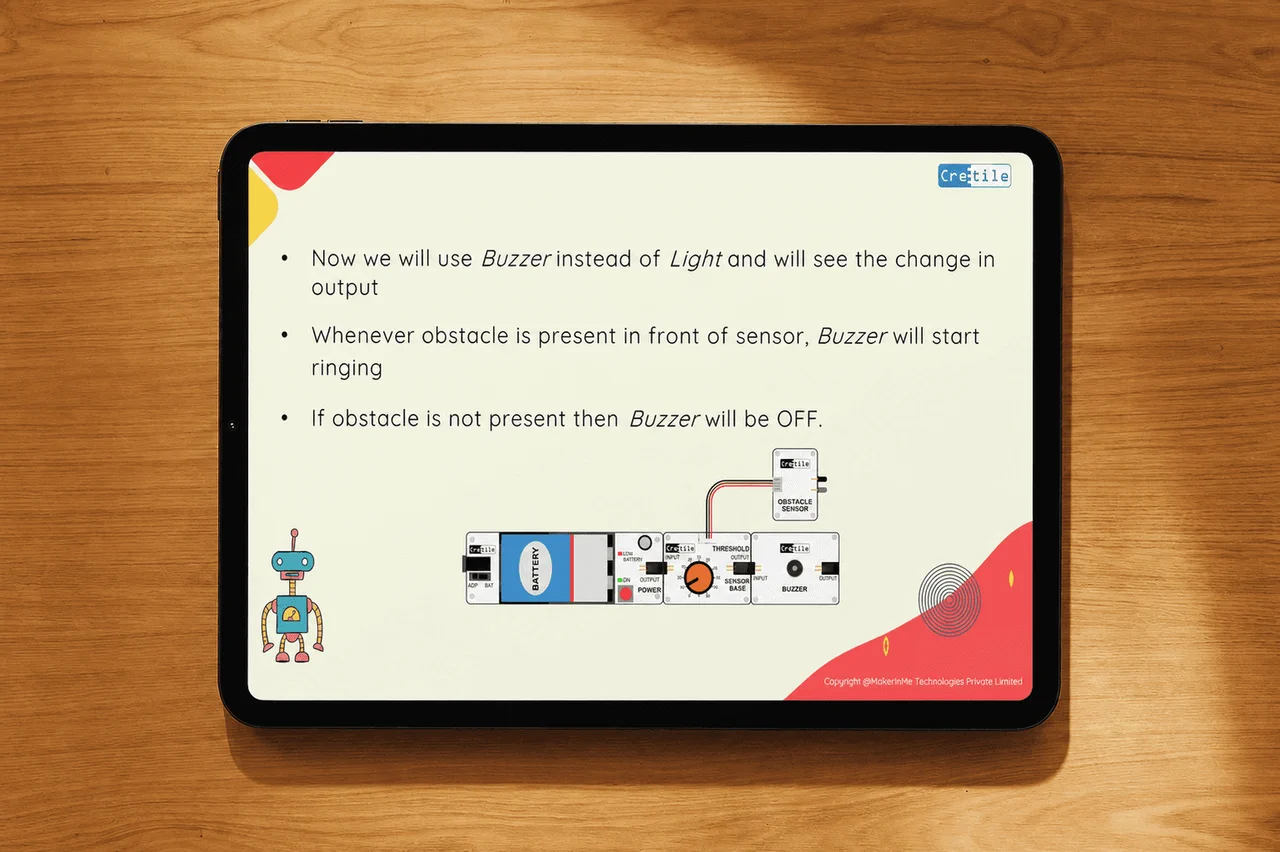
- A lesson for every period. Every Cretile kit includes lifetime access to a learning platform (LMS) with a session plan, class presentation, step-by-step guide, video and quiz for each project, plus curriculum mapping. A teacher can open next week's lesson the night before. See what's in the Cretile curriculum.
- A fixed slot on the timetable. Training wears off if the lab isn't used for a month. A weekly period keeps skills fresh.
In Wardha, Maharashtra, where we set up 8 labs with the state government, we trained Zilla Parishad (district council) school teachers, and then watched them guide their own students through robotics projects. That's the real test of training: sessions that keep running after the trainer has left.
How does Cretile's training reach a school?
Through our partners. Cretile trains the trainers at the EdTech companies and programmes we work with, and they train the teachers in each school. That's how one curriculum and one way of teaching reach hundreds of classrooms we'll never visit ourselves.
It's also the main reason partners choose Cretile. A kit is easy to copy. A training method that gets non-technical teachers running sessions on their own, and that a partner's own trainers can pass on, is not.
Can one training cover a whole district or a large programme?
Yes, if the training is built around the same kit and the same lessons for everyone, so teachers who were trained together can help each other afterwards.
In Neyveli, Tamil Nadu, more than 150 teachers came together in one programme to build projects with Cretile and take coding, electronics and design back to their classrooms. At that scale, the shared curriculum matters as much as the sessions: every teacher leaves with the same lessons, so a coordinator can support all of them.
For an Atal Tinkering Lab (ATL), the government-funded tinkering lab under the Atal Innovation Mission, or a CSR programme across many schools, ask the supplier how training continues after the first visit, and who teachers contact when they're stuck.
Who this is for
You're a school principal. You're about to buy kits, or you have kits that aren't being used. Before ordering, ask who trains your teachers, for how many days, and what they can open next week. If the kits are already in a cupboard, ask whether retraining on the same kit would get them used before you buy new ones.
You're a STEM or ATL coordinator. You'll be the person other teachers come to. Ask for training that covers how each module works, not just the projects, so you can solve faults without calling the supplier.
You're a CSR or NGO programme lead. Your report depends on sessions happening in schools you can't visit every week. Fund training with the kits, not after, and ask to see a programme where trained teachers ran sessions on their own.
You're running an EdTech STEM programme. Your renewals depend on teachers in many schools actually running sessions. That's how we work with partners: we train your trainers on the kit, the projects and the LMS, and they train the teachers in your schools, all on one curriculum. Whitelabelling is available.
What to ask a supplier about teacher training
| Question |
A good answer |
| How many days of training, and is it hands-on? |
Several days, building the actual projects |
| Does it start with how the kit works? |
Yes, module by module, before any project |
| What happens if a student connects it differently? |
It still connects: there's no single right way |
| Where do teachers find next week's lesson? |
A platform with a video, guide and slides for each project |
| How long do teachers keep access? |
For as long as the school uses the kit |
| Who helps after the trainer leaves? |
The trainer's team, plus a video and guide for every project and a curriculum every teacher shares |
FAQ
Can teachers without a technical background run a STEM lab?
Yes. Most do. They need hands-on training on the kit they'll use, a ready lesson for each period, and equipment with no wrong way to connect it.
How long does STEM teacher training take?
Typically 3 to 5 days for a new lab, depending on the number of teachers and kits. A focused two-day session can work for a small group, as it did for 5 teachers in Rajkot.
Is online STEM teacher training enough?
Online sessions work for lessons and the learning platform. The first builds should be hands-on, because teachers learn the most from a circuit that doesn't work the first time.
What should STEM teacher training include?
How each part of the kit works, building the projects students will build, how to run a 40-minute class, and where to find the next lesson.
How does Cretile train teachers?
We train the trainers at our EdTech partners, onsite or online, and they train the teachers in each school. Every kit also comes with lifetime access to the LMS: session plans, class presentations, step-by-step guides, video tutorials and quizzes for every project.
Get started
Tell us how many teachers you need to train, which grades they teach, and whether you already have kits. We'll suggest a training plan and connect you with the Cretile partner nearest you.
Not sure yet? Order one kit with full LMS access and use it for 8 weeks. If it isn't right, we arrange the pickup and a full refund.
Related: How Cretile blocks work · Robotics curriculum for schools · What a STEM lab is, and what goes into one
Talk to us