A school with no computer lab can run a full hands-on STEM programme if the kits work with no screens in the early grades, run on rechargeable batteries, set up inside one class period, and have no wrong way to connect the parts. A computer is needed later, for coding. It doesn't have to come first.
The catch is that most kits assume a computer, a socket at every table and a teacher who can debug a circuit. Take one of those away and the session stops. Buying a cheaper version of the same kit doesn't fix that.
We set up 8 labs in one district, Wardha in Maharashtra, with the state government, and trained Zilla Parishad (district council) school teachers there. This guide covers what a kit has to handle, and how to check before you buy.
4 checks
No computer, uncertain power, no fixed room, no specialist teacher
Grade 1 to 3
Kits with no screens and no coding
Grade 4
When coding, and a computer, comes in
8 labs
Set up with the Maharashtra government in Wardha
What does "no computer lab" actually mean for a STEM kit?
"No computer lab" usually hides four separate problems: no computers, power that can't be relied on, no room set aside for the lab, and no teacher with an electronics background. A kit has to handle each one. If it handles three out of four, the fourth still stops the class.
| Problem |
What the kit has to do |
What fails |
| No computers |
Produce a working result with nothing plugged into it |
Boards that do nothing until code is uploaded from a computer |
| Power you can't rely on |
Run on its own rechargeable battery |
A kit that needs a wall socket at every table |
| No room set aside |
Come out of a box and pack away inside one period |
Fixed benches, wiring, or a room that must stay locked |
| No specialist teacher |
Have no wrong way to connect the parts |
Parts that only work one way round, which a non-specialist can't debug |
Check a kit against all four rows, not against the phrase "suitable for rural schools".
Can students learn STEM without computers?
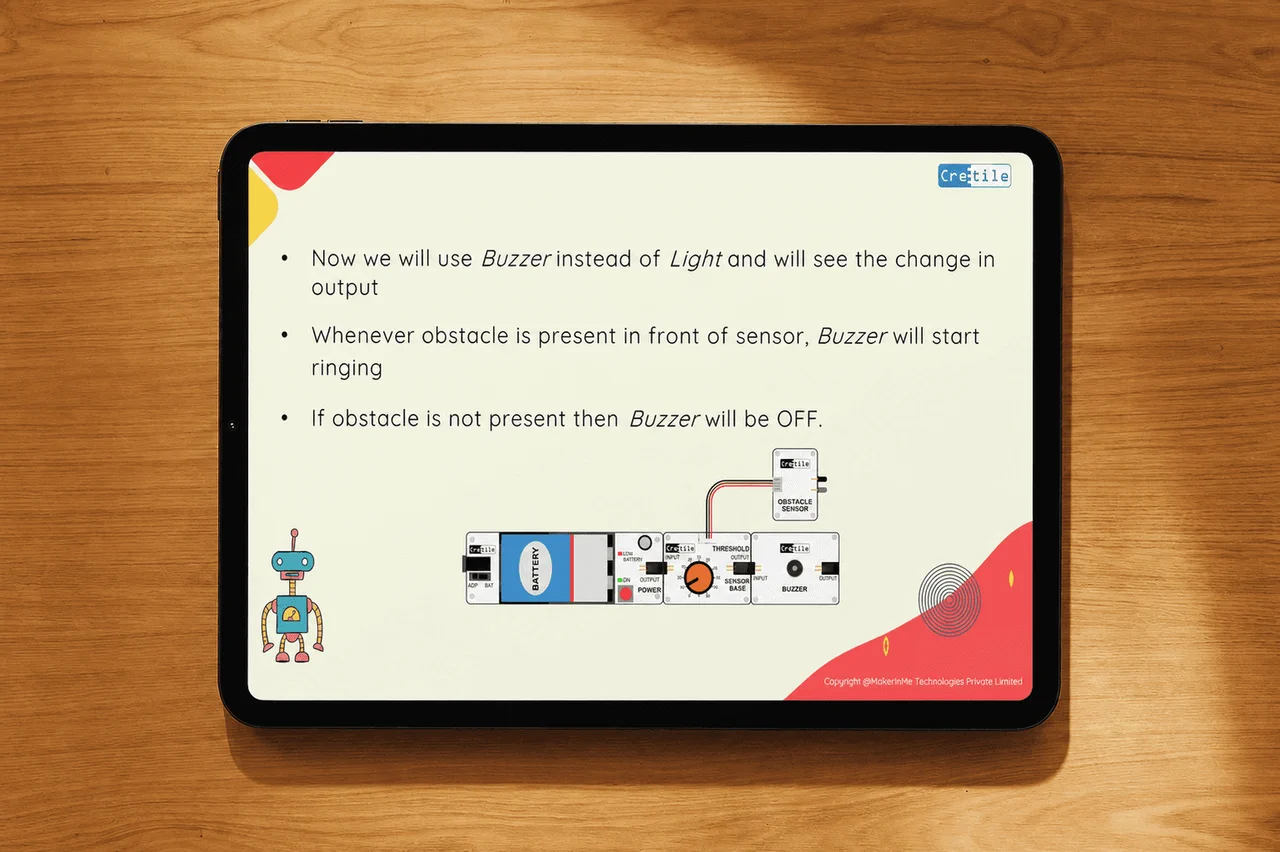
Yes. In the early grades, students can build working circuits, alarms and simple machines with no screen and no code, because the logic lives in how the blocks are connected. A water sensor connected to a buzzer sounds when the water rises. Nothing needs to be uploaded.
This isn't a lesser version of coding. A student who works out why the buzzer stays quiet is debugging. A student who decides where the sensor goes is planning a sequence. The interface is physical instead of typed.
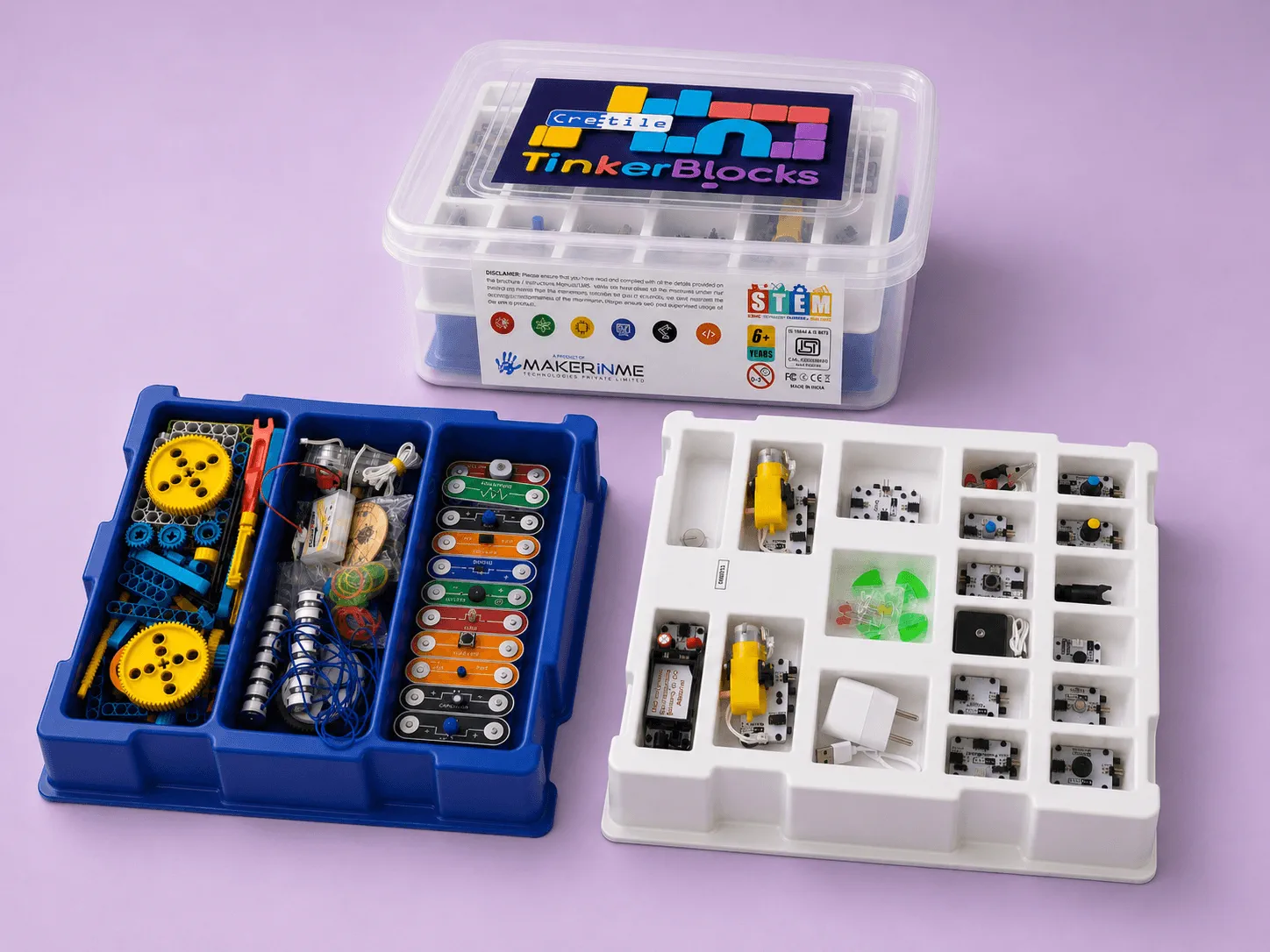
In our programme, the kits for Grades 1 to 3, TinkerBlock and EduPlay, have no coding and no screens. TinkerBlock has 75 projects. EduPlay has 46, mapped to the Grade 1 to 3 science and maths syllabus. Coding starts in Grade 4, on a computer, and a school can bring in a few shared devices for those sessions.
The same project grows with the grade. A water level alarm is built with no code in Grade 4. In Grade 5 the student adds a condition to decide when it sounds. In Grade 7 it becomes an internet of things (IoT) project that sends an alert to a phone. The no-code version needs no device at all; the coded versions use a computer.
What if the school's power supply is unreliable?
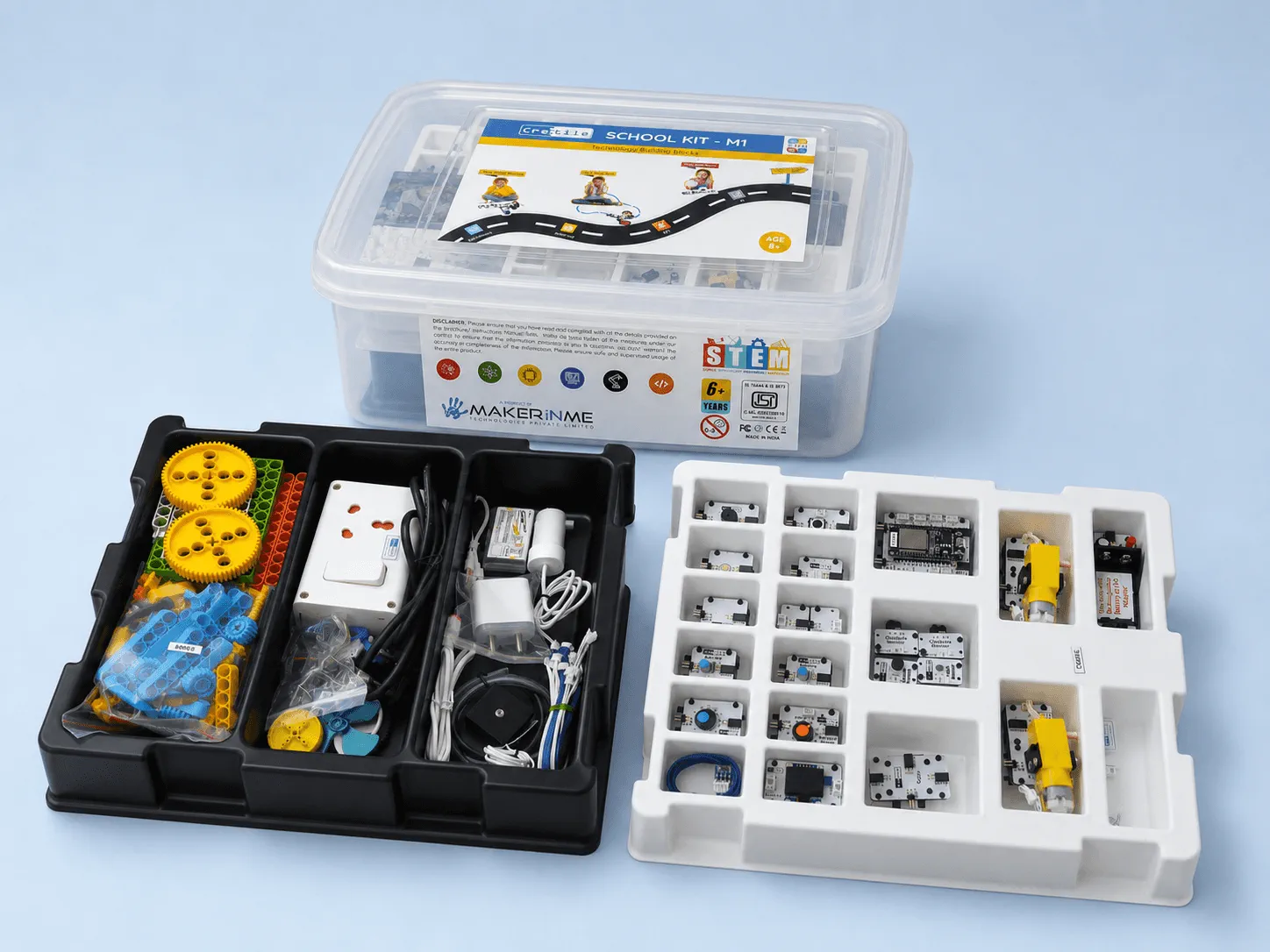
Pick kits that run on their own rechargeable battery, charged whenever power is available, so the session doesn't depend on a socket in the classroom. Every Cretile kit ships with a rechargeable battery and a charger.
One thing to check: the whole kit has to run on the battery. If even one part needs mains power, the session depends on the building's electricity again.
Charging becomes a routine, not a problem. Kits are charged in a window when power is on, such as the end of the school day, and used the next day.
Can a STEM lab work without a separate room?
Yes, if the kit comes out of a box and packs away inside one period. Then the lab is a box that goes to the classroom, not a room the class walks to.
A 40-minute period with 15 minutes of setup is a 25-minute period, and teachers soon stop running it. Blocks that connect without tools, soldering or wiring solve this. So does storage: a stackable box in a cupboard is easier to keep safe than a room full of equipment that has to be locked.
A period then splits roughly into three parts: 15 minutes to introduce the project and the idea, 15 minutes to build and test, and 10 minutes to find faults, fix them and talk about why it works.
Can teachers without a technical background run STEM classes?
Yes, if there's no wrong way to connect the parts and the teacher has a lesson ready for each period. Both matter more than the teacher's subject.
If parts only work when connected one particular way, teachers act sensibly. They demonstrate instead of letting students build, because they can't always find what went wrong. Hands-on learning turns into watching. Every Cretile block uses the same standard connection, so any block joins any other, and there's more than one way to reach a working result. Students can try things, and a different arrangement is an experiment, not a mistake. More on this in how Cretile blocks work.
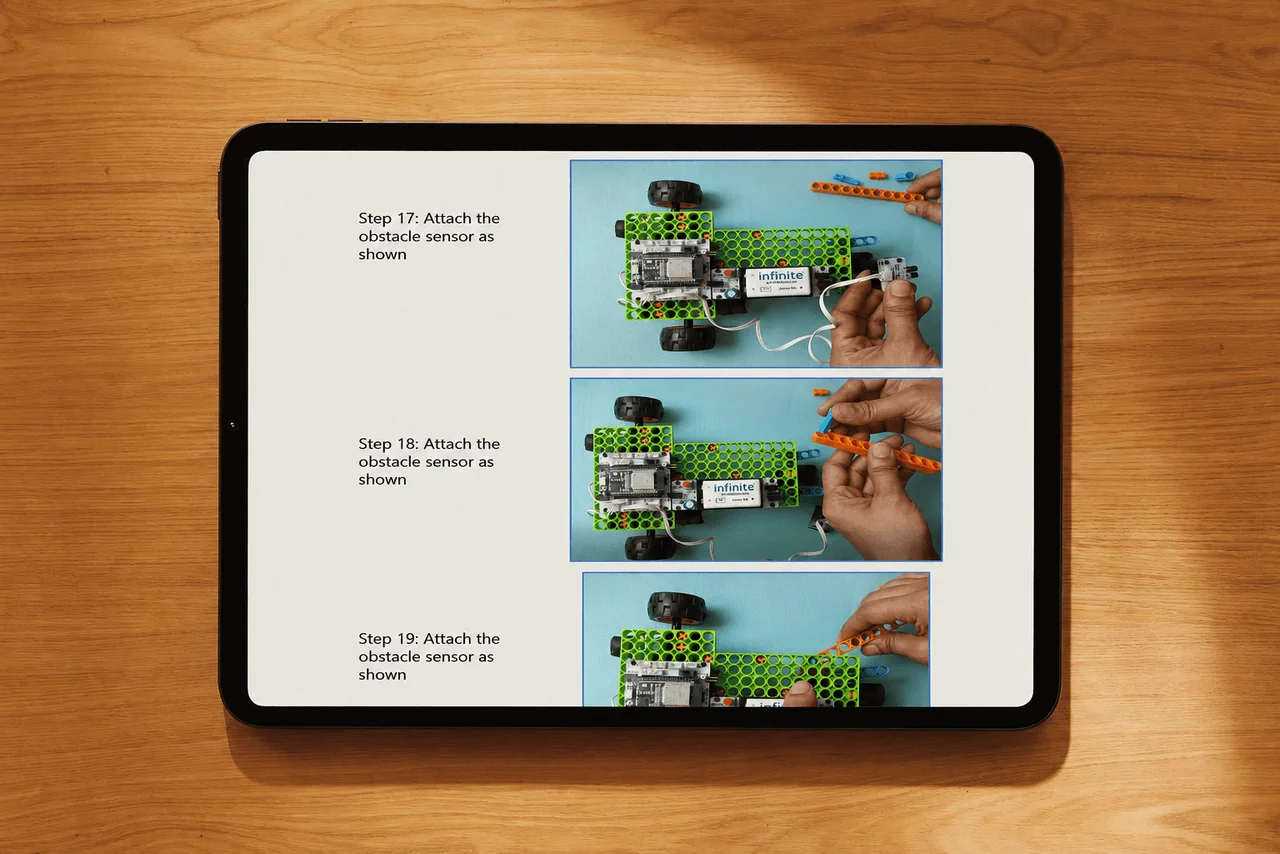
The second half is preparation. A teacher needs to know what to build this week and how to explain it. Every Cretile kit comes with lifetime access to a learning platform (LMS) with a session plan, class presentation, step-by-step guide, video and quiz for each project. Teachers are trained through our partners: we train their trainers, and they train the teachers in each school.
In Wardha, we trained Zilla Parishad school teachers and then watched them guide their own students through robotics projects. That's the real test of a programme for these schools: sessions that keep running after the supplier has left.
Are cheaper loose components a better option?
Loose components, such as boards, sensors and motors bought separately, cost less per kit. They are a sound choice where a school has a teacher who is comfortable with electronics. Where it doesn't, they fail all four checks at once.
They need a computer to program. They don't come with a power plan. They arrive as parts to assemble, not a box that opens. And a wrong connection can damage them, with nobody on site to work out which part failed.
The number that matters is the cost per session actually taught, not the cost per kit. A kit that gets used every week costs less per session than a cheaper one that gets used a few times and then stays in the cupboard. For college students who want raw electronics, plain components are the right tool, and we sell Arduino UNO R4 boards for exactly that.
How to check a STEM kit before you buy
Ask the supplier these questions, and ask to see the answer, not just hear it:
- Which grades can use it with no computer at all? Ask for a project from that grade.
- Does every part run on the kit's own battery? Ask how long it runs and how it's charged.
- How long does setup take? Ask for it to be set up in front of you in a normal classroom.
- Is there only one right way to connect the parts? Ask a student to try a different arrangement.
- Is there a lesson for every period? Ask to see the lesson for week 10, not week 1.
- Who trains the teachers, for how long, and what happens after?
- Which parts get used up? Consumables turn a one-time cost into a yearly one.
Who this is for
You're a CSR or NGO programme lead. You fund labs in schools where the infrastructure is thin, and you need outcomes you can report. Ask suppliers to pass the seven checks above, and to show a deployment in schools like yours. Wardha is ours.
You're the head of a government or government-aided school. You may not have a computer lab, and your teachers already have full timetables. A kit that sets up inside a period and needs no expert is the one that will still be used next term.
You're running a STEM programme for an EdTech company. Your rural schools renew only if sessions actually happen. Kits that work without screens and power sockets cut the number of things that can go wrong on a school visit. We train your trainers, and they train the teachers in your schools. Whitelabelling is available.
The four checks, side by side
| Check |
Question to ask |
What a good answer looks like |
| No computers |
Does it work with nothing attached? |
Working projects in the early grades with no code; a computer only once coding starts |
| Uncertain power |
Does every part run on battery? |
A rechargeable battery and charger in the box |
| No room |
Can it be set up and packed away in one period? |
Blocks that connect without tools or wiring, in a stackable box |
| No specialist teacher |
Is there only one right way to connect it? |
No: any block joins any other, plus a ready lesson and training |
FAQ
Which STEM kits work without a computer lab?
Kits where the early-grade projects work with no code, every part runs on a rechargeable battery, setup fits in one period, and there's no wrong way to connect the parts. Cretile's TinkerBlock and EduPlay kits for Grades 1 to 3 need no screens or coding.
Can students learn coding without computers?
They can learn the thinking behind it: sequencing, conditions and debugging. In the early grades that happens by connecting blocks physically. Writing code on a screen can come later, from Grade 4 in our programme.
Do STEM kits need electricity or internet?
Not if they run on rechargeable batteries. The batteries are charged when power is on and used during class. Internet is only needed for internet of things (IoT) projects in the higher grades.
Can a STEM lab work without a separate room?
Yes. If the kit comes in a box and sets up without tools, it can be used in a normal classroom and stored in a cupboard.
What do teachers need to run STEM classes in rural schools?
A ready lesson for each period, equipment with no wrong way to connect it, and hands-on training before the first class. Cretile trains its partners' trainers, who train the teachers, and every kit includes lifetime access to lessons, videos and guides.
Get started
Tell us about the schools you're planning for: how many, which grades, and whether any have computers or reliable power. We'll suggest a kit mix and connect you with the Cretile partner nearest you.
Not sure yet? Order one kit with full LMS access and use it for 8 weeks. If it isn't right, we arrange the pickup and a full refund.
Talk to us
Sources
- Cretile product pages: TinkerBlock, EduPlay, Combined, Mini School (what's in each box, including the rechargeable battery and charger).
- Wardha: 8 labs in one district with the Government of Maharashtra, opened on Independence Day.